-
By:
- otis
- No comment
no sew fleece blanket instructions pdf
No-sew fleece blankets offer a wonderfully accessible crafting experience, perfect for all skill levels! Project Linus provides patterns and instructions, often in PDF format, for creating cozy blankets.
These blankets are quick, easy, and require absolutely no sewing – just fleece fabric and a pair of scissors! Enjoy a simple, rewarding project.
What is a No-Sew Fleece Blanket?
A no-sew fleece blanket is a cozy and comforting textile created without the need for traditional sewing techniques. Instead of needles and thread, these blankets are constructed by simply cutting fringes along the edges of two pieces of fleece fabric and then tying those fringes together.
Many resources, including Project Linus, offer free no-sew fleece blanket instructions in PDF format. These guides detail the process, making it incredibly beginner-friendly. The result is a soft, warm blanket perfect for snuggling, gifting, or donating. It’s a fantastic project for crafters of all ages and abilities, offering a quick and satisfying outcome.
The simplicity of the method makes it a popular choice for quick gifts and charitable contributions;
Why Choose a No-Sew Fleece Blanket?
Choosing a no-sew fleece blanket project offers numerous benefits! Firstly, it’s incredibly easy – no prior sewing experience is required. Numerous online resources, like those offering no-sew fleece blanket instructions in PDF format, provide clear, step-by-step guidance.
Secondly, it’s a fast craft, allowing you to create a cozy blanket in a single afternoon. The simplicity also makes it budget-friendly, requiring only fleece fabric and scissors. Furthermore, these blankets are wonderfully versatile – perfect for gifts, donations (Project Linus!), or simply adding warmth and comfort to your home.
It’s a rewarding and accessible crafting experience for all ages!

Materials Needed for Your Fleece Blanket
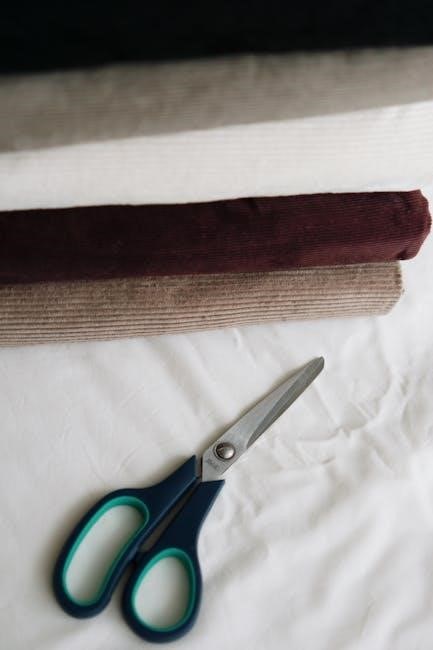
Fleece fabric is essential, alongside sharp scissors and a measuring tool. Many no-sew fleece blanket instructions, often available as a PDF, detail fabric quantities.
Types of Fleece Fabric
Fleece comes in a delightful array of textures and weights, impacting your no-sew blanket’s final feel; Anti-pill fleece is a popular choice, resisting those pesky little balls, and is often recommended in no-sew fleece blanket instructions, frequently found as a PDF download.
Microfleece is incredibly soft and lightweight, ideal for baby blankets. Heavier plush fleece provides extra warmth, perfect for colder climates. Printed fleece offers instant patterns, eliminating the need for additional embellishments. When following a PDF guide, note the recommended fleece weight for optimal results. Consider the intended recipient and climate when selecting your fabric!
Ultimately, the best fleece is the one you love!
Essential Tools: Scissors & Measuring Tools
Creating a no-sew fleece blanket requires minimal tools! Sharp scissors are paramount – rotary cutters can also be used for straight lines, though aren’t essential. Many no-sew fleece blanket instructions, often available as a convenient PDF, emphasize the importance of a sharp blade for clean fringe cuts.
A measuring tape or ruler is crucial for accurate fabric dimensions. Some PDF guides include pre-calculated cutting charts for various blanket sizes. A cutting mat protects your work surface. While not mandatory, a large, flat surface simplifies the process. Remember to double-check measurements before cutting – accuracy ensures a beautifully finished blanket!
Step-by-Step Instructions: Basic No-Sew Method
No-sew fleece blanket instructions, often found as a PDF, begin with cutting fabric squares. Then, create fringe and tie knots for a cozy finish!
Preparing the Fleece: Cutting the Fabric
Preparing the fleece is the crucial first step, often detailed in a no-sew fleece blanket instructions PDF. Begin by laying your two fleece pieces right sides together, ensuring even alignment.
Most PDF guides recommend trimming the edges to create perfectly straight lines – this is vital for a neat fringe. Standard blanket sizes dictate fabric dimensions; a throw typically requires 1.5 to 2 yards of fleece per layer.
Use sharp fabric scissors for clean cuts, and a rotary cutter with a mat can be incredibly helpful for larger projects. Accuracy at this stage directly impacts the final blanket’s appearance and feel.
Creating the Fringe: Cutting the Squares
Creating the fringe is where the blanket truly takes shape, and a no-sew fleece blanket instructions PDF will guide you through this process. Typically, you’ll cut squares along all four edges of the combined fleece layers.
Most guides recommend squares of 4-6 inches, though personal preference dictates the fringe length. Consistent square size is key for a uniform look; use a ruler to mark cutting points before using sharp scissors.
Ensure you cut through both layers of fleece simultaneously to maintain even fringe across the entire blanket. Precision here prevents uneven tying later on!
Tying the Fringe: Securing the Blanket
Tying the fringe is the final step, beautifully detailed in most no-sew fleece blanket instructions PDF guides. Take two corresponding fringe pieces – one from each fleece layer – and tie them in a simple overhand knot.
Pull the knots firmly, but not so tightly that they distort the fleece. Maintain consistent tension for a neat, even border. Work your way around the entire blanket, tying each pair of fringe pieces together.
Double-knotting adds extra security, especially for blankets intended for frequent use. This secures the layers and prevents unraveling, ensuring a long-lasting, cozy creation!
Variations and Advanced Techniques
No-sew fleece blanket instructions PDF often showcase exciting variations! Explore reversible designs, patterned blankets, and unique fringe styles for personalized, creative projects.
Reversible Fleece Blankets: Two-Sided Designs
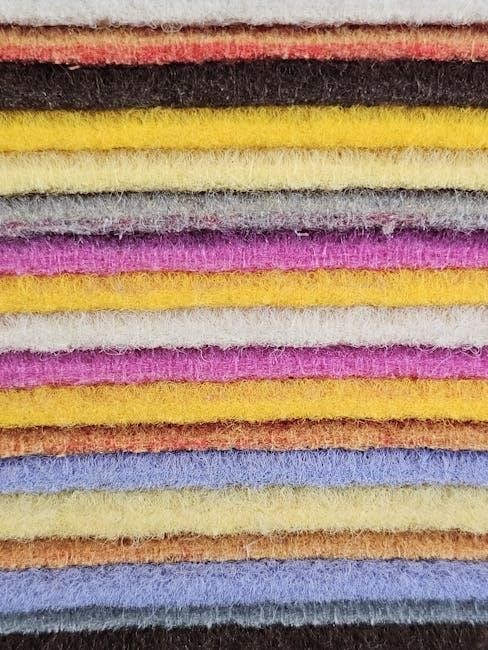
Reversible fleece blankets elevate the classic no-sew project with double the cozy appeal! Many no-sew fleece blanket instructions PDF guides detail how to create these stunning two-sided designs. The process involves layering two complementary fleece fabrics, typically with different colors or patterns, and then cutting and tying the fringe through both layers simultaneously.
This technique ensures a seamless and durable bond, resulting in a blanket that’s visually interesting from both sides. PDF resources often include diagrams illustrating the layering and cutting process, making it easy to follow along. Consider contrasting prints for a bold look or coordinating solids for a more subtle aesthetic. Reversible blankets offer versatility and a touch of handmade elegance!
Adding Patterns and Designs to Your Blanket
Personalize your no-sew fleece blanket with exciting patterns and designs! Numerous no-sew fleece blanket instructions PDF resources showcase creative embellishment techniques. Beyond simply choosing patterned fleece, consider appliqué designs using contrasting fleece pieces – no sewing required, just strategic cutting and fringe tying!
You can also find PDFs demonstrating how to create simple shapes or letters within the fringe itself. For a unique touch, explore using themed fleece fabrics for holidays or special occasions. Remember to check Project Linus guidelines if donating, as certain patterns are preferred. Let your imagination run wild and create a truly one-of-a-kind blanket!
Creating Different Fringe Styles
Beyond the standard square fringe, explore diverse styles using no-sew fleece blanket instructions PDF guides! Many tutorials detail how to create thinner, more delicate fringe for a softer look, or wider fringe for a bolder statement. Some PDFs demonstrate techniques for angled or scalloped fringe edges, adding visual interest.
Experiment with varying fringe lengths across the blanket for a textured effect. You can even create a knotted fringe by tying multiple strands together for added durability and a unique aesthetic. Remember to maintain consistent fringe spacing for a polished finish. These variations elevate a simple blanket into a personalized masterpiece!
Sizing Guide for No-Sew Fleece Blankets
No-sew fleece blanket instructions PDF resources often include sizing charts! These guides detail fabric dimensions for baby, throw, twin, and larger blankets.
Proper sizing ensures a cozy and functional finished product for any recipient.
Baby Blanket Sizes
No-sew fleece blanket instructions PDF guides frequently begin with baby blanket dimensions, as these are popular gifts. A common size for a baby blanket is 36″ x 36″, providing ample coverage for strollers and cribs.
Smaller receiving blankets can be around 30″ x 30″. Many patterns suggest using two layers of fleece for extra warmth and softness, ideal for delicate skin. Project Linus, a charity providing blankets to children in need, often specifies size requirements within their PDF instructions.
Remember to account for fringe length when calculating the initial fabric cuts. Always double-check measurements before cutting to ensure a perfectly sized, cuddly blanket!
Throw Blanket Sizes
No-sew fleece blanket instructions PDF resources commonly feature throw blanket sizes, perfect for cozying up on the couch. A standard throw blanket measures approximately 50″ x 60″, offering generous coverage for one person.
Larger throws can reach 60″ x 70″ or even 70″ x 80″ for sharing. Many downloadable PDF instructions detail fabric requirements based on the desired size and fringe length. Project Linus also provides guidelines for throw blanket dimensions.
Consider the recipient’s preferences when choosing a size; a larger throw is ideal for taller individuals or those who enjoy being fully enveloped in warmth.
Twin, Full, Queen & King Sizes
No-sew fleece blanket instructions PDF guides often include dimensions for larger bed sizes. Twin blankets typically measure 66″ x 90″, while Full size requires approximately 80″ x 90″. Queen blankets are commonly 90″ x 100″, offering ample coverage.
For a King size bed, a blanket around 108″ x 100″ is recommended. These larger sizes necessitate more fleece fabric and potentially joining pieces together, as detailed in some PDF instructions.
Project Linus guidelines may offer specific size recommendations for donations, ensuring blankets fit standard bed dimensions comfortably.
Finding Free No-Sew Fleece Blanket Patterns & PDFs
Numerous websites offer free no-sew fleece blanket instructions PDF downloads! Project Linus and various crafting blogs provide accessible patterns and detailed guides.
Project Linus Blanket Guidelines
Project Linus welcomes no-sew fleece blankets created with care for children in need. Their guidelines, often available as a PDF, specify blanket requirements for donation.
Blankets should be made with two layers of fleece, secured by tying or braiding the fringe. No-sew fleece blanket instructions PDF resources from Project Linus detail acceptable fringe lengths and knotting techniques;
They request that blankets are new, smoke-free, and free of embellishments like buttons or ribbons, ensuring safety for recipients. Specific size preferences vary, so checking their current needs before crafting is recommended. You can find their detailed guidelines and patterns on their official website.
Online Resources for Patterns
Numerous websites offer free no-sew fleece blanket instructions PDF downloads and tutorials. Many crafting blogs provide step-by-step guides with photos, catering to various skill levels. Pinterest is a treasure trove, linking to diverse patterns and creative ideas.
Websites like FleeceFun.com and DIY projects sections of larger crafting sites often feature downloadable PDFs. YouTube also hosts numerous video tutorials demonstrating the process visually.
Remember to check the source’s credibility and ensure the instructions are clear and easy to follow before starting your project. Exploring these resources unlocks a world of blanket designs!
Troubleshooting Common Issues
No-sew fleece blanket instructions PDF guides often address common problems like uneven fringes or fabric slippage during tying. Careful cutting and firm knots help!
Uneven Fringe Lengths
Uneven fringe lengths are a frequent concern when making no-sew fleece blankets, but easily remedied! Many no-sew fleece blanket instructions PDF resources emphasize the importance of precise measuring and cutting.
Using a rotary cutter and ruler, or carefully marking with a fabric pen, ensures consistent fringe width. Double-checking each square before cutting is crucial. If slight variations occur, don’t panic! They often even out during the tying process.
For significant discrepancies, gently trim the longer fringes after cutting, being careful not to cut into the blanket’s base. Consistent pressure and a sharp pair of scissors are your allies in achieving a neat, uniform fringe.
Fleece Slipping During Tying
Fleece slipping during tying is a common frustration addressed in many no-sew fleece blanket instructions PDF guides. The stretchy nature of fleece can make securing knots tricky. A helpful technique is to tie the fringes tightly and double-knot them for extra security.
Some tutorials suggest slightly wetting the fringe ends before tying; the moisture temporarily reduces slippage. Working on a non-slip surface, like a rubber mat, can also help stabilize the fabric.
Avoid pulling the knots too tightly initially, as this can distort the blanket. Gradually tighten after several knots are secured, distributing the tension evenly.
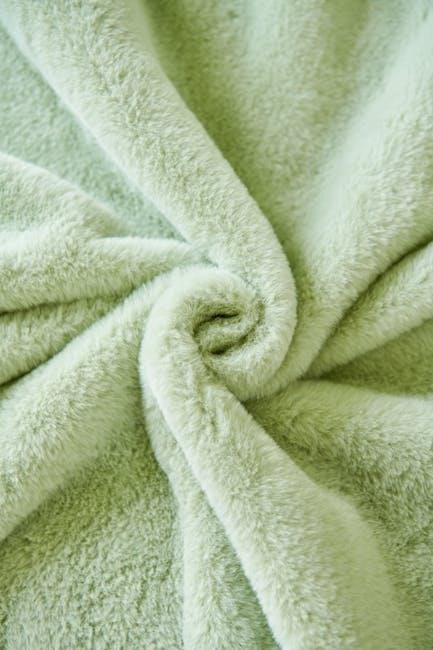
Caring for Your No-Sew Fleece Blanket
No-sew fleece blanket instructions PDF often include care tips! Machine wash cold on a gentle cycle, and tumble dry low to maintain softness and prevent pilling.
Washing Instructions
No-sew fleece blanket instructions PDF resources consistently recommend gentle washing practices to preserve the blanket’s cozy texture and prevent damage. Always machine wash your fleece blanket on a cold, delicate cycle. Using cold water minimizes shrinkage and helps maintain the vibrancy of the colors.
Avoid using harsh detergents or fabric softeners, as these can reduce the fleece’s softness and potentially cause pilling. A mild, liquid detergent is the best choice. It’s also advisable to wash the blanket separately or with similar items to avoid lint transfer from other fabrics.
Before placing the blanket in the washing machine, consider turning it inside out to further protect the surface from abrasion.
Drying Instructions
No-sew fleece blanket instructions PDF guides universally advise against high-heat drying methods. To best care for your blanket, tumble dry on a low heat setting or, ideally, air dry. High heat can cause the fleece fibers to melt or become damaged, resulting in a matted or distorted texture.
If using a dryer, consider adding dryer balls to help fluff the blanket and reduce drying time. Avoid using dryer sheets, as they can leave a residue that diminishes the fleece’s softness.
For optimal results, lay the blanket flat or hang it to air dry, ensuring it’s fully dry before storing to prevent mildew.