
-
By:
- otis
- No comment
the ancient guide to modern life
Today’s discourse on “The Ancient Guide to Modern Life” blends Natalie Haynes’ praise of Athenian democracy with critical reflections on its roots.Critics note that while the book illuminates Greek and Roman influence, some conclusions feel banal, yet it sparks dialogue on applying ancient wisdom today. daily now
Historical Context of Ancient Civilisations
The ancient guide to modern life invites readers to trace the roots of contemporary culture back to the cradle of Western thought. By examining the rise of Greek city‑states, the emergence of early civic structures, and the spread of Hellenistic ideas across the Mediterranean, the narrative shows how foundational concepts of law, rhetoric, and artistic expression were forged. The book highlights the enduring influence of classical literature, the codification of legal principles, and the development of public discourse that shaped later European traditions. It also explores how the legacy of antiquity persists in modern institutions, language, and artistic practices, underscoring that the Greeks and Romans were not so distant from our own societies. Through this historical lens, the guide demonstrates that the intellectual and cultural achievements of the ancient world continue to inform the way we live, govern, and communicate today.
In sum, the guide weaves a tapestry that connects the intellectual heritage of antiquity with realities of 21st‑century life!!
Relevance to Contemporary Society
Educational curricula weave classical insights into critical thinking, encouraging learners to question assumptions. Tech‑enabled forums replicate Athenian assemblies, allowing participants worldwide to practice deliberation in real time. Stoic principles to manage stress, architects cite Roman engineering to design resilient structures. These applications show the ancient guide’s enduring relevance, informing contemporary practice across education, technology, industry!!
Modern societies increasingly turn to ancient wisdom to address contemporary issues such as climate change, digital privacy, and social inequality. The deliberative methods of Athenian assemblies teach citizens how to balance diverse views and reach consensus through structured debate. Roman law and civic duty inform current legal systems, ensuring accountability and protecting minority rights. Classical rhetoric—ethos, pathos, and logos—equips speakers to craft persuasive narratives that mobilize communities toward collective action. Stoic practice of distinguishing what we can control from what we cannot builds psychological resilience, helping individuals stay composed amid uncertainty. These lessons appear in education, where curricula blend critical thinking, ethical reasoning, and civic engagement, preparing students for responsible citizenship. The enduring relevance of ancient thought also shows in technology, where modular design and user‑centered interfaces echo Roman architecture and Greek theater. Thus, the ancient guide offers a versatile framework that informs policy, education, technology, and personal growth, demonstrating how timeless insights can adapt to modern contexts. By integrating these age‑old principles, leaders and citizens can cultivate a reflective, equitable, and resilient society that honors the past while innovating for the future today!

Key Philosophical Pillars
The ancient guide highlights Socrates’ dialectic, Aristotle’s virtue ethics, and Stoic resilience. These pillars shape modern thought, fostering critical inquiry, moral character, and inner calm. Their synthesis offers tools for ethical decision‑making, personal growth, and societal harmony. It remains vital. And guide

Socrates: The Socratic Method
Socrates, an Athenian philosopher, pioneered the Socratic method—a dialectical technique that encourages critical thinking through relentless questioning. By probing assumptions, he revealed contradictions in interlocutors’ beliefs, prompting self‑reflection and intellectual humility. This method, rooted in the pursuit of truth, remains a cornerstone of modern education, fostering analytical skills and ethical reasoning. Its influence extends beyond academia into public discourse, where Socratic dialogue cultivates informed citizenship and democratic deliberation. In contemporary society, the method inspires debate platforms, corporate training, and therapeutic practices, underscoring the enduring relevance of questioning as a tool for personal growth and collective progress. Socrates’ insistence on questioning authority challenged prevailing norms, fostering a culture where ideas were tested rather than accepted, a principle that modern democratic institutions echo in their emphasis on transparency and accountability ensuring civic life now. By engaging in Socratic dialogue, citizens learn to articulate their values, confront biases, and negotiate meaning, thereby cultivating a resilient public sphere where diverse perspectives are not merely tolerated but actively explored fostering intellectual curiosity deep. Moreover, the Socratic method’s legacy is evident in modern educational curricula that prioritize inquiry-based learning, encouraging students to question assumptions and develop critical reasoning skills essential for navigating complex societal challenges. future!?
Aristotle: Virtue Ethics
Aristotle’s concept of virtue ethics, articulated in the Nicomachean Ethics, posits that moral excellence arises from cultivating habitual dispositions that balance excess and deficiency. Central to his theory is the doctrine of the mean, where virtues such as courage, temperance, and generosity are situated between extremes of rashness or cowardice, intemperance or stinginess. By framing ethical behavior as a dynamic process of habituation, Aristotle emphasizes that individuals learn moral character through repeated practice, guided by rational deliberation and contextual judgment. His notion of eudaimonia—human flourishing achieved through virtuous activity—transcends mere pleasure or external success, linking well‑being to the fulfillment of one’s rational nature. This framework informs contemporary discussions on moral development, suggesting that education should cultivate practical wisdom (phronesis) alongside knowledge. Modern psychological research on character strengths echoes Aristotle’s emphasis on balanced traits, while public policy debates on civic virtue draw on his insights into the role of community and deliberative governance. In the workplace, virtue ethics informs leadership models that prioritize integrity, empathy, and accountability, encouraging leaders to act as moral exemplars rather than mere decision‑makers. By integrating Aristotle’s principles, modern societies can foster resilient, ethically grounded citizens capable of navigating complex moral landscapes while maintaining personal and collective flourishing. The enduring relevance of his ideas underscores the value of intentional character formation in an era of rapid change and moral ambiguity, inviting ongoing dialogue about how best to nurture virtue in individuals and communities alike. Moreover, Aristotle’s emphasis on community underscores the interconnectedness of individual virtue and societal well‑being, reminding us that flourishing is achieved not only through personal excellence but also through active participation in the common good. In contemporary curricula, educators incorporate Aristotle’s virtue framework by encouraging students to reflect on their actions, assess motivations, and develop self‑regulation. Through case studies and reflective journals, learners identify virtuous and vicious patterns, fostering a habit of ethical reasoning that aligns with the Aristotelian mean. This pedagogical approach promotes lifelong learning and moral resilience, equipping individuals to face ethical dilemmas with balanced judgment. Thus, Aristotle’s virtue ethics remains a foundational guide for cultivating moral character in the modern world.

Stoicism, originating in Hellenic and refined by Roman thinkers, offers a framework for resilience and living. Epictetus taught that freedom stems from what lies within our control and what does not, encouraging acceptance of external events, mastering internal responses. Seneca’s letters to Lucilius emphasize the power of reason, urging readers to cultivate virtue, manage desires, and practice gratitude even amid adversity. Marcus Aurelius, in his Meditations, records a personal diary of disciplined reflection, urging self‑examination, humility, and service to the common good. Together, these voices converge on the idea that tranquility arises from aligning one’s will with nature’s rational order, fostering a mindset that views challenges as opportunities for growth. In contemporary contexts, Stoic principles inform cognitive‑behavioral techniques, mindfulness practices, and leadership training. By reframing stressors as tests of character, individuals can reduce anxiety, enhance focus, and maintain composure in high‑stakes environments. Modern entrepreneurs adopt Stoic strategies to navigate uncertainty, while educators use Stoic anecdotes to teach resilience and ethical decision‑making. The Stoic emphasis on virtue as the sole good aligns with current discussions on purpose‑driven work, encouraging professionals to prioritize integrity over external rewards. Moreover, the Stoic practice of negative visualization—consciously imagining loss—prepares individuals for change, fostering adaptability in a rapidly evolving world. Digital platforms now host communities that share Stoic wisdom, translating ancient maxims into actionable guidance for everyday life. Thus, the Stoic legacy endures as a timeless compass, guiding modern citizens toward balanced, purposeful, and emotionally resilient living. Its teachings guide us to mindful living.

Political Lessons
Athenian democracy, though praised, faced practical challenges; its evolution under Pericles illustrates pragmatic solutions to complex civic issues. Roman republicanism offered checks and balances, shaping modern governance and. These insights underscore the importance of adaptable institutions.
Athenian Democracy and Pericles

Pericles, a pivotal figure in Athenian democracy, championed reforms that expanded citizen participation and fostered a sense of collective responsibility. His policies, such as the payment of public office, allowed broader engagement beyond the elite, thereby mitigating socioeconomic barriers. However, contemporary critiques highlight that these reforms were not without flaws; the democratic system still struggled with issues of representation, especially concerning women, slaves, and metics. The legacy of Pericles’ leadership offers a nuanced perspective: while his vision elevated democratic ideals, it also underscored the necessity of pragmatic adjustments to address evolving civic challenges. Modern observers draw lessons from this historical episode, noting that the balance between idealism and practicality remains essential for sustaining robust democratic institutions in today’s complex societies. The interplay between Pericles’ idealistic rhetoric and the pragmatic realities of governance illustrates how ancient political thought can inform contemporary debates on civic engagement, equality and institutional resilience. By studying the successes and shortcomings of Athenian democracy, we gain insight into the importance of inclusive participation, the limits of majority rule, and the need for safeguards against demagoguery. These insights encourage a reflective approach to modern democratic practice, reminding us that the pursuit of a just society requires both visionary leadership and practical mechanisms that protect minority voices and ensure equitable representation.
Pericles’ legacy highlights the role of public rhetoric in shaping civic discourse. By encouraging citizens to articulate their views, the democratic process cultivated a culture of dialogue that remains relevant for contemporary deliberative assemblies seeking inclusive participation.
Roman Republican Ideas
Roman republicanism, rooted in the early Republic’s struggle against monarchy, emphasized a mixed constitution that combined elements of monarchy (consuls), aristocracy (Senate), and democracy (popular assemblies). The dual consulship, elected annually, served as a check on individual power, while the Senate, composed of patrician and later equestrian elites, functioned as a deliberative body guiding foreign policy, finance, and legal precedent. The tribunes of the plebs, elected by the plebeians, wielded veto power to protect lower classes from arbitrary decrees, illustrating an early form of minority protection. The codification of laws, culminating in the Twelve Tables, established a public legal framework that reduced the influence of personal arbitrariness. Moreover, the Roman concept of civitas expanded citizenship gradually, integrating conquered peoples and fostering a sense of shared identity that transcended tribal divisions. These republican principles influenced later constitutional thought, inspiring the framers modern republics to adopt checks and balances, separation of powers, and a codified legal system. In contemporary contexts, Roman emphasis on civic duty, public debate, and institutional restraint offers a template for balancing individual liberties with collective responsibility, ensuring that governance remains responsive yet stable. By studying Roman republicanism, modern societies can glean strategies for institutional design that promote accountability, prevent tyranny, and encourage inclusive participation across diverse populations

Language and Rhetoric
Greek rhetorical techniques—ethos, pathos, logos—shaped persuasive speech, while Latin’s concise, formal style influenced modern legal and scientific terminology. These ancient frameworks guide contemporary communication, emphasizing clarity, ethos, and structured argumentation.

Greek Rhetoric Techniques
Greek rhetoric, formalized by Aristotle, Demosthenes, and Isocrates, rests on three pillars: ethos, pathos, and logos. Ethos establishes credibility through moral character and expertise, pathos appeals to emotions and shared values, while logos relies on logical structure and evidence. The art of persuasion is further refined by the use of rhetorical devices such as anaphora, antithesis, and metaphor, which create rhythm, contrast, and vivid imagery. In ancient assemblies, speakers practiced the art of the oratorical contest, known as the “paradeisos,” where they would craft speeches that balanced argument with rhetorical flourish. The use of the “kairos” moment—timing the speech to the audience’s readiness—was crucial for maximizing impact. Moreover, the “sophist” tradition introduced a skeptical approach, questioning assumptions and encouraging critical thinking. This tradition influenced later rhetorical education, leading to the establishment of the “Rhetoric” as a distinct discipline in the curriculum of the Lyceum and later in Roman schools. The legacy of Greek rhetoric persists in modern political discourse, legal argumentation, and everyday communication, where the principles of ethos, pathos, and logos remain foundational to effective persuasion. By mastering these techniques, contemporary speakers can craft messages that resonate across cultures and eras, ensuring that the ancient art of rhetoric continues to shape modern thought. These principles continue to guide modern rhetoric, ensuring clarity and impact today! In modern classrooms, teachers employ Aristotle’s three canons—inventio, dispositio, and elocutio—to structure arguments, while students learn to balance evidence with emotional appeal. Political leaders, journalists, and entrepreneurs alike draw on these techniques to craft compelling narratives that mobilize audiences and influence public opinion. The enduring relevance of Greek rhetoric underscores humanity’s innate desire to communicate persuasively, bridging past and present through language. Consequently, mastering these ancient tools equips individuals to navigate landscape with clarity today!!

Latin Influence on Modern Language
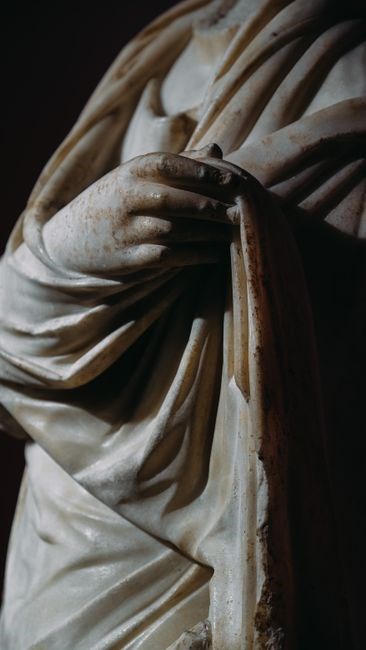
Latin’s imprint on contemporary tongues is profound. From the Romance families—Spanish, French, Italian, Portuguese, and Romanian—to the lexicon of science, law, and theology, Latin provides a shared etymological backbone. In the 19th and early 20th centuries, the revival of classical education reinforced Latin as the lingua franca of academia, producing terms such as “analysis,” “democracy,” and “philosophy” that remain unchanged. The Latin alphabet itself, adopted by most modern languages, standardizes phonetic representation, enabling cross‑cultural literacy. Moreover, Latin’s grammatical structures—cases, declensions, and conjugations—serve as a model for teaching syntax in language courses worldwide. The influence extends to legal terminology: words such as “habeas corpus,” “pro bono,” and “prima facie” are embedded in everyday legal discourse. In medicine, Latin phrases like “in situ,” “per se,” and “ex vivo” are still used to describe procedures and conditions. The persistence of Latin in scientific nomenclature, especially in biology and chemistry, preserves a universal naming system that transcends national borders. Even in popular culture, Latin phrases are employed for stylistic flair, as seen in film titles, advertising slogans, and academic mottos. Latin also permeates modern computing: domain extensions such as .com, .org, and .edu derive from Latin roots meaning “together,” “organization,” and “education.” In academia, Latin mottos like “Carpe diem” and “Ad astra per aspera” inspire students, while grading terms such as “cum laude” and “magna cum laude” honor achievement. Musical notation—terms like allegro, adagio, and presto—originated in Latin, guiding performers worldwide. Thus, Latin’s legacy is not merely historical; it actively shapes modern communication, ensuring continuity and precision across disciplines. Latin’s influence also manifests in everyday English, where countless words—such as “information,” “communication,” “government,” and “consequence”—trace their roots back to Latin. The use of Latin prefixes (e.g., “pre‑,” “post‑,” “inter‑”) and suffixes (e.g., “‑tion,” “‑ment,” “‑ity”) allows speakers to create nuanced meanings quickly. In religious practice, the Catholic Church’s liturgy and official documents remain largely in Latin, preserving a sense of continuity with the past. Even the modern legal system’s reliance on Latin phrases underscores the language’s enduring authority. Consequently, Latin’s legacy is woven into the fabric of modern life, from the classroom to the courtroom, from the laboratory to the concert hall.